The beauty of the night sky has fascinated human beings for thousands of years. Our ancestors looked up at the stars and made sense of their world through the patterns they saw in the sky. Today, however, many of us live in areas where the night sky is obscured by light pollution. Light pollution is the result of human activity that affects the natural darkness of the night sky. In this blog post, we will discuss the impact of light pollution on the night sky and how to reduce your impact while stargazing.
Light pollution is the result of artificial light sources that emit light into the night sky. It can take many forms, including street lights, outdoor security lights, and commercial lighting. Light pollution can be seen from space and can even interfere with astronomical observations. Light pollution can also negatively impact the natural environment, including wildlife and the overall health of ecosystems.
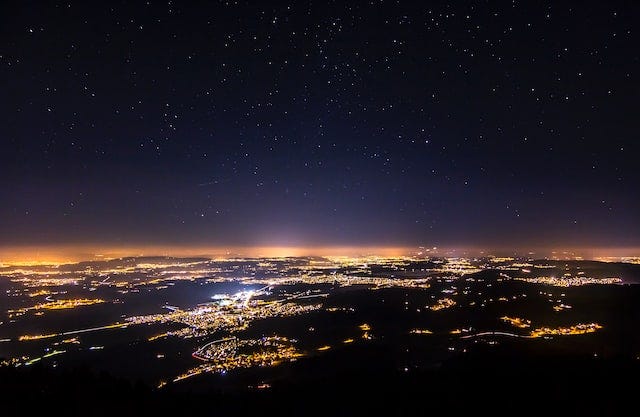
Light pollution has a significant impact on the night sky, and it can be seen in several ways. One of the most significant impacts of light pollution is the reduction in the number of visible stars. When we look up at the night sky in an area with heavy light pollution, we may only be able to see a handful of stars. This is because the light pollution from nearby artificial lights obscures the natural light of the stars, making them much harder to see.
Another impact of light pollution is the reduction in the quality of the light that we see. In areas with heavy light pollution, the sky takes on a yellow or orange hue, which can make it difficult to see the natural colors of the stars and planets. Light pollution can also make it challenging to see faint objects in the sky, such as comets or meteor showers.
Light pollution is a growing concern worldwide as our cities and towns continue to grow and expand. It not only affects the beauty of the night sky, but it also has negative impacts on the environment and human health.
Here are some additional ways that light pollution can affect us:
Light pollution can disrupt the natural rhythms of wildlife, affecting their mating and migration patterns. It can also affect the behavior of nocturnal animals and insects, which can have a ripple effect throughout the ecosystem.
Exposure to artificial light at night can disrupt our circadian rhythms, which can lead to sleep disorders, depression, and other health problems. It can also interfere with the production of melatonin, a hormone that regulates sleep and is crucial for our immune system.
Light pollution is also a waste of energy and resources. It’s estimated that up to 30% of outdoor lighting is wasted due to inefficient fixtures, poor design, and unnecessary use.
While light pollution is a significant problem, there are steps that we can take to reduce our impact on the night sky. Here are a few tips for reducing your impact while stargazing:
Light pollution is a significant problem that affects the natural beauty of the night sky. However, by taking simple steps like choosing a dark location, using red lights, and advocating for change, we can reduce our impact on the night sky and preserve its beauty for generations to come. It’s up to all of us to make a difference and create a brighter, more sustainable future.


Henry Everett is a writer and farmer who has a deep passion for the outdoors.